
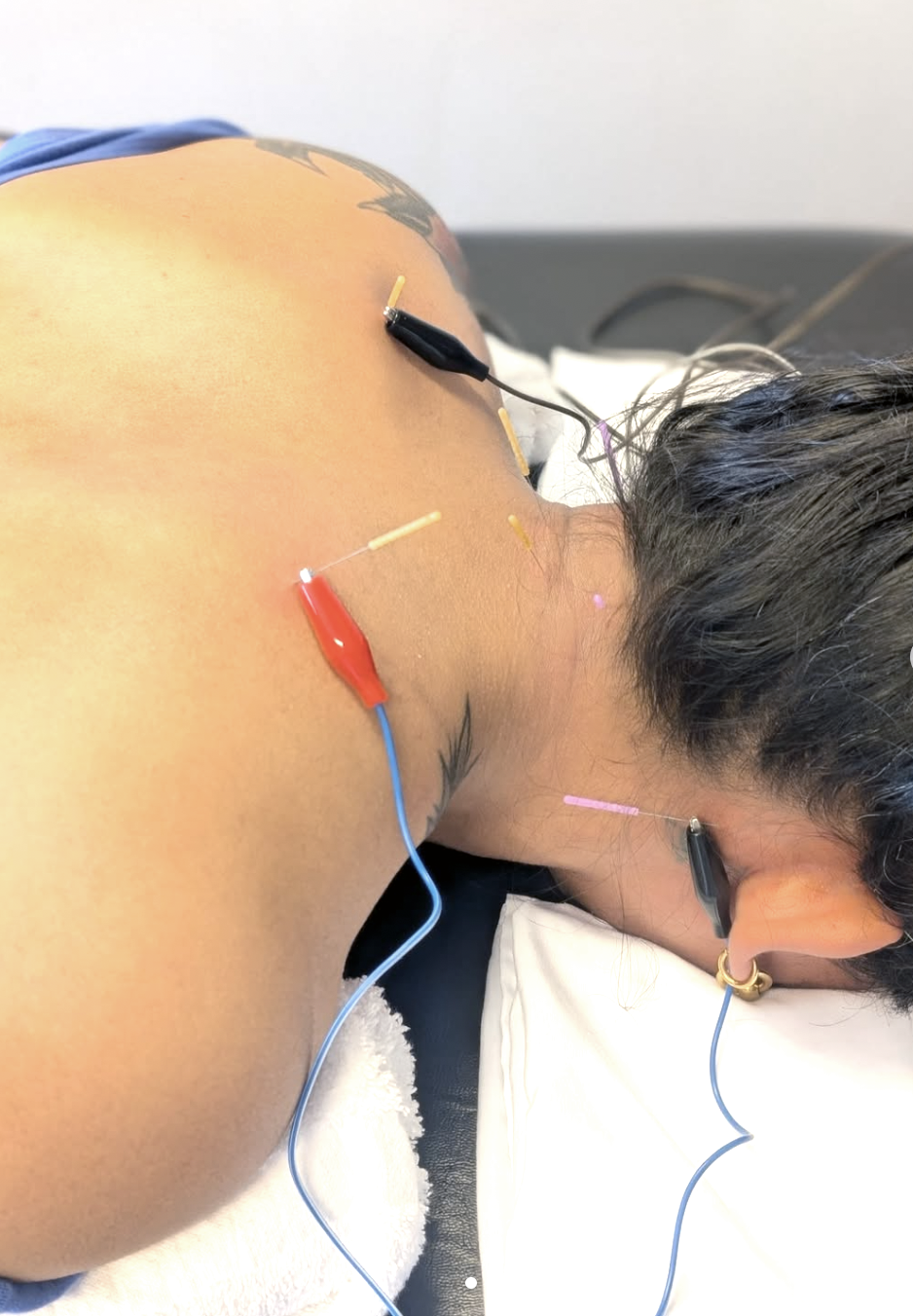
What is Dry Needling?
Dry needling is a treatment in which your physical therapist inserts a very thin needle into specific areas of the body, usually targeting tight or irritated muscles, connective tissue, or nearby nerves. These areas can contribute to pain and limited movement. Unlike injections, the needle does not deliver any medication—its effect comes from how it stimulates the body’s tissues and nervous system. The treatment effects tend to be compounded by adding electrical stimulation to the treatment. You can see an example of this on our instagram page here.
When the needle is inserted into a tight muscle, it can create a small twitch response that helps the muscle relax and “reset,” reducing tension and improving flexibility. At the same time, the stimulation from the needle can calm down overactive pain signals being sent to the brain, essentially interrupting the cycle of pain. Dry needling also increases blood flow to the treated area, which helps bring oxygen and nutrients to the tissue and supports the body’s natural healing process. In addition to these local effects, it can activate the body’s broader pain-relief systems within the brain and spinal cord, leading to more widespread pain reduction.
Research shows that dry needling can be helpful for a variety of common conditions, including, but not limited to neck and back pain, shoulder problems, headaches, knee arthritis, plantar fasciitis, TMJ dysfunction, tennis and golfer's elbow and carpal tunnel syndrome among many others. Many people experience decreased pain, improved movement, and an easier return to normal activities after treatment. It is often most effective when combined with other treatments such as exercise and physical therapy, rather than used on its own. Overall, dry needling is considered a safe and evidence-supported technique that can play an important role in reducing pain, improving function, and helping people recover more quickly.
Does insurance cover it?
Mostly not, unfortunately. There are a few insurance companies that do pay, but it is inconsistent across the board. We generally charge $50 up front and if your insurance does end up paying, we will reimburse you the $50 immediately.
If you have more questions about your specific case, please feel free to call and ask to speak with either Jamie or Bryan and we can give you a better idea of whether or not dry needling can be helpful for you.